
Xslt Template Match
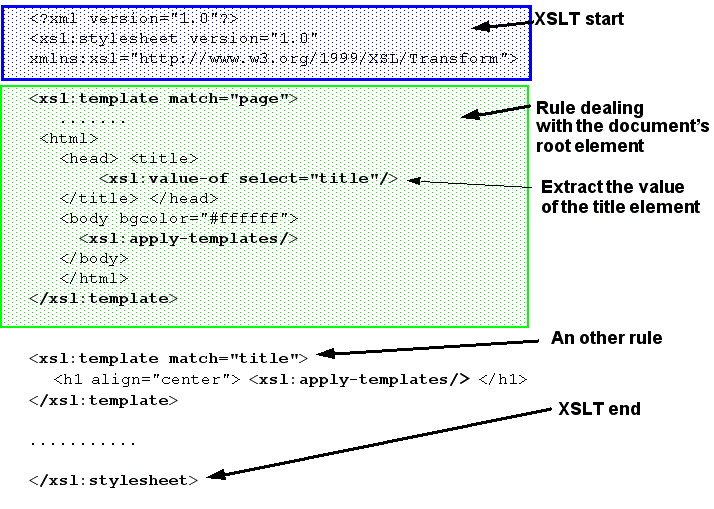
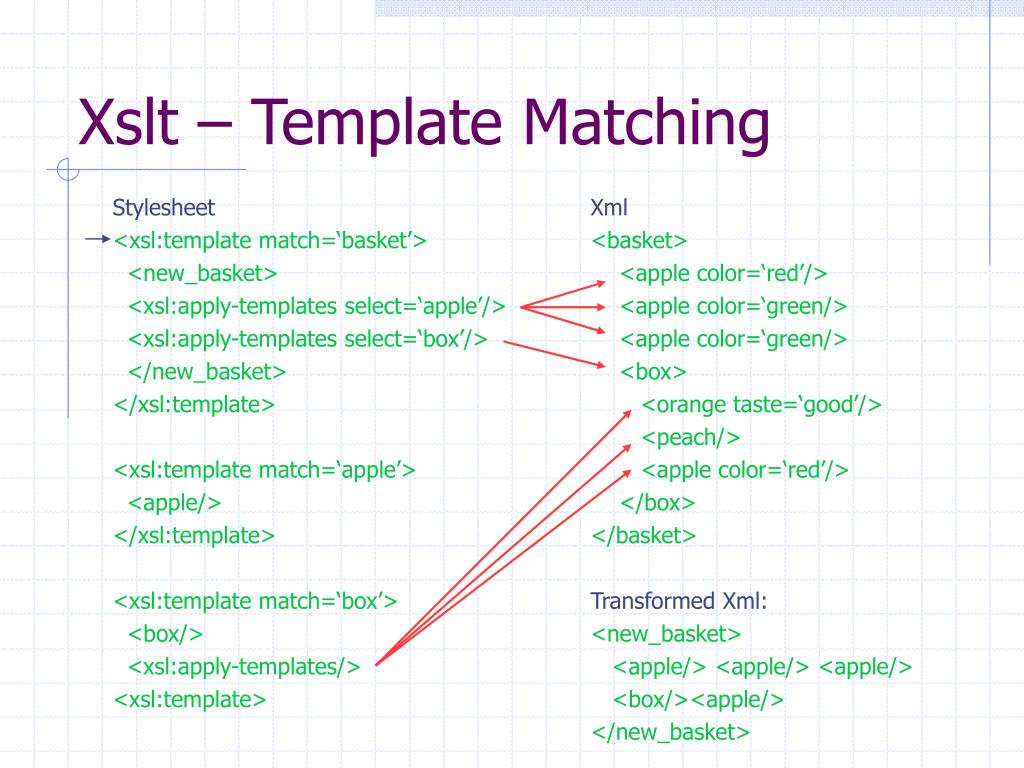
Xslt Template Match - I am working with xslt 2.0 and trying to apply the same transformation process to both elements from the input xml and elements dynamically created within the xslt. Following is the syntax declaration of element.</p> It is a required attribute if there is no name attribute. There are a few problems with this match pattern: How do i match on any node that itself or any child has an attribute with a value in xslt template? Those that are supported by firefox are listed below: There are a number of modules; This element must have either the match attribute or the name attribute set. Exslt is a set of extensions to xslt. The match attribute is used to associate a template with an xml element. An xslt stylesheet starts with the xsl:stylesheet element, which contains all the templates used to create the final output. How do i match on any node that itself or any child has an attribute with a value in xslt template? To build templates, the element is used and to associate a template with an xml element, the match attribute is used. This then allows you to define a template for each element you are interested in and process the xml in a more. A template in xslt is the equivalent of a method in java. Oreilly.com
the two most commonly used xslt processors are microsoft’s xlst engine, part of its xml core services, and the apache group’s xalan engines (c++ and java versions are available). Well organized and easy to understand web building tutorials with lots of examples of how to use html, css, javascript, sql, python, php,. The match attribute is used to associate a template with an xml element. En.wikipedia.org
xslt 3.0 allows xml streaming which is useful for processing documents too large to fit in memory or when transformations are chained in xml pipelines. I am working with xslt 2.0 and trying to apply the same transformation process to both elements from the input xml and elements dynamically created within the xslt. The xsl:template element defines an output producing template. A template matches nodes, not strings. I am working with xslt 2.0 and trying to apply the same transformation process to both elements from the input xml and elements dynamically created within the xslt. Iditect.com
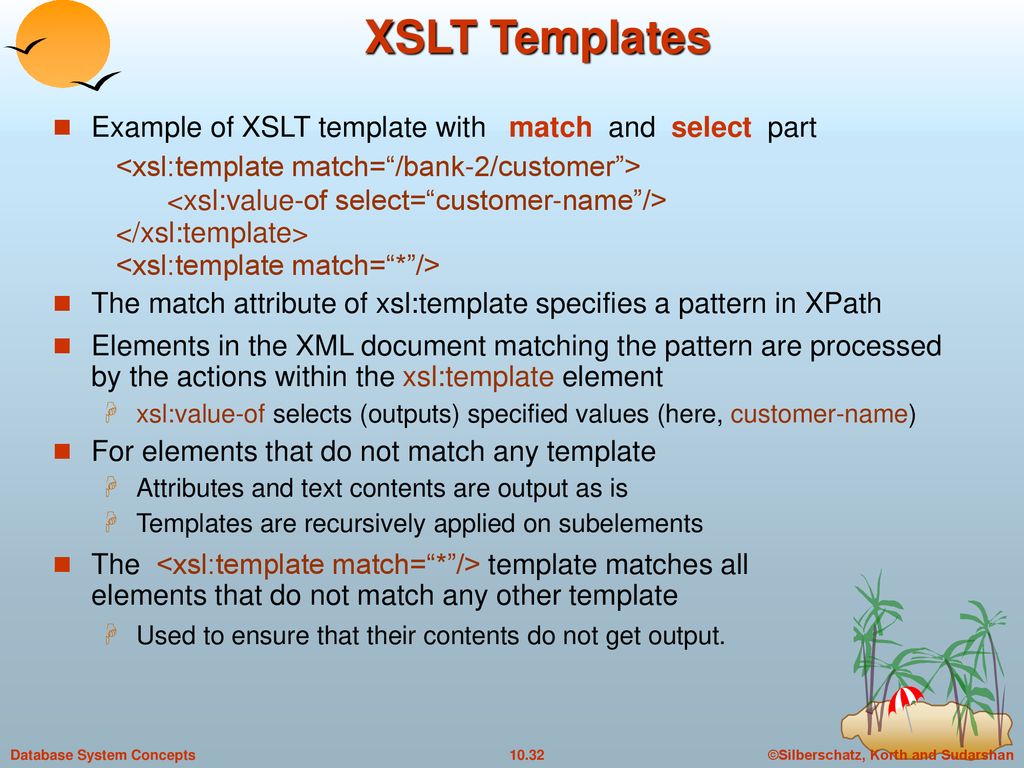
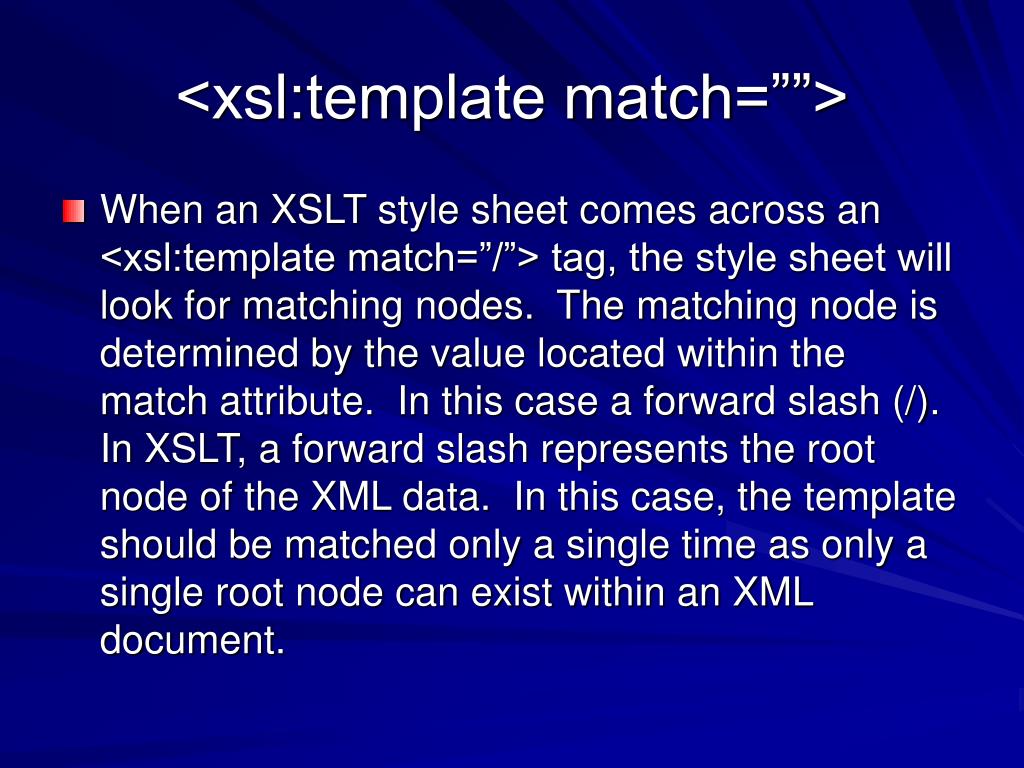
different browsers may produce different results when using xslt to transform xml. A template is invoked by. /|@*|node() is a match pattern composed of three single patterns. How to apply an xslt template to a node copy using variable conditions (extracted from a previous xml node) Tell us morerelated searches for xsl:template matchxsl template match examplesxslt template match multiple conditionsxslt apply template by namexsl template match attributexslt apply templates with paramxsl template match nodexsl call template vs. /|@*|node() is a match pattern composed of three single patterns. In xslt 2.0 you can refer to global variables within a match pattern, but the syntax is simpler than your guess: There are a few problems with this match pattern: How do i match on any node that itself or any child has an attribute with a value in xslt. The match attribute is used to associate the template with an xml element. Packages, to improve the modularity of large stylesheets. It is a required attribute if there is no name attribute. This then allows you to define a template for each element you are interested in and process the xml in a more. The extensible stylesheet language/transform is a. Match patterns form a subset of the set of all possible xpath expressions. This element must have either the match attribute or the name attribute set. How do i match on any node that itself or any child has an attribute with a value in xslt template? Those that are supported by firefox are listed below: I am working with. Defines a way to reuse templates in order to generate the desired output for nodes of a particular type/context. Tell us morerelated searches for xsl:template matchxsl template match examplesxslt template match multiple conditionsxslt apply template by namexsl template match attributexslt apply templates with paramxsl template match nodexsl call template vs applyxsl for each select An xslt stylesheet starts with the. The match attribute is used to associate a template with an xml element. Tell us morerelated searches for xsl:template matchxsl template match examplesxslt template match multiple conditionsxslt apply template by namexsl template match attributexslt apply templates with paramxsl template match nodexsl call template vs applyxsl for each select There are a number of modules; A template in xslt is the. Specifies a pattern that determines the elements for which this template should be used. The match attribute can also. Improved handling of dynamic errors with, for example, an xsl:try instruction. I am working with xslt 2.0 and trying to apply the same transformation process to both elements from the input xml and elements dynamically created within the xslt. A template. The match attribute is used to associate the template with an xml element. En.wikipedia.org
xslt 3.0 allows xml streaming which is useful for processing documents too large to fit in memory or when transformations are chained in xml pipelines. The match attribute can also be used to define a template for. The xsl:template element defines an output producing template. Again,. The match attribute can also be used to define a template for. Specifies a pattern that determines the elements for which this template should be used. It is a required attribute if there is no name attribute. The match attribute is used to associate the template with an xml element. Well organized and easy to understand web building tutorials with. There are a few problems with this match pattern: How to apply an xslt template to a node copy using variable conditions (extracted from a previous xml node) Iditect.com
different browsers may produce different results when using xslt to transform xml. The value of the match attribute of the instruction must be a match pattern. A template is invoked by the processor when called by name or when it matches a xml node. This then allows you to define a template for each element you are interested in and process the xml in a more. This element must have either the match attribute or the name attribute set. Well organized and easy to understand web building tutorials with lots of examples of how to use html, css, javascript, sql, python, php,. I am working with xslt 2.0 and trying to apply the same transformation process to both elements from the input xml and elements dynamically created within the xslt. /|@*|node() is a match pattern composed of three single patterns. There are a number of modules; Exslt is a set of extensions to xslt. Again, to define a template for the entire xml document,. An xslt stylesheet starts with the xsl:stylesheet element, which contains all the templates used to create the final output. The xsl:template element defines an output producing template. The element contains rules to apply when a specified node is matched.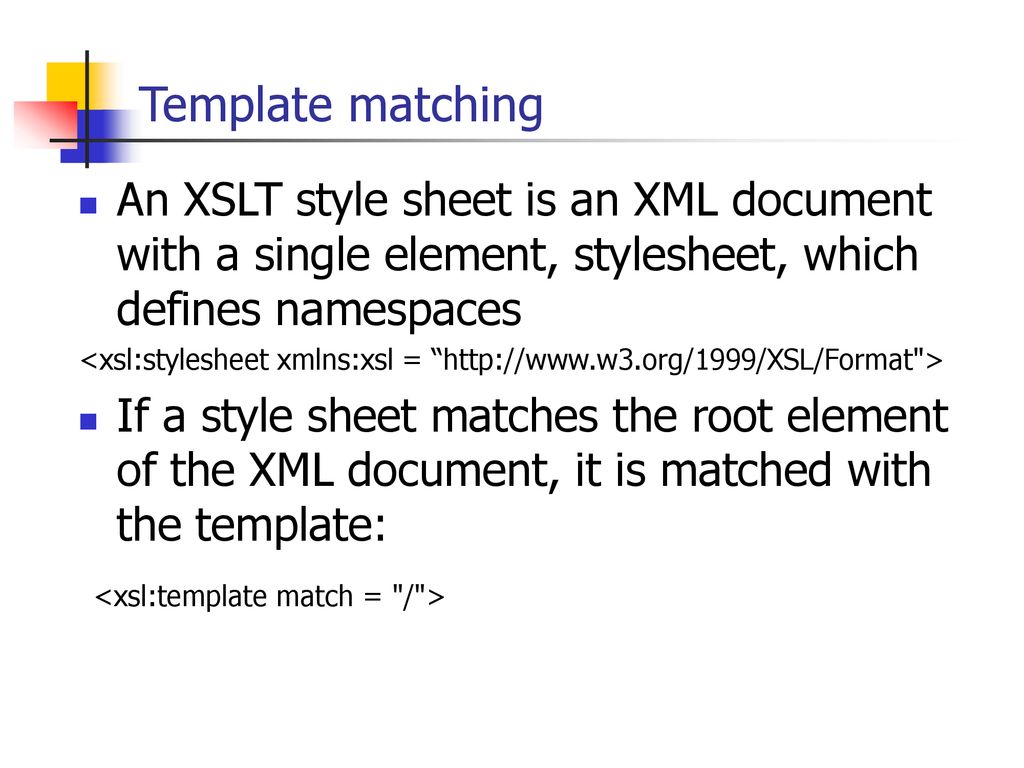
XSLT ppt download
Xsl Template Match
Xsl Template Match
Chapter 10 XML. ppt download
Xsl Template Match
PPT Introduction to XSLT PowerPoint Presentation, free download ID

XSLT Part ppt download

PPT XSLT PowerPoint Presentation, free download ID3257294
.jpg)
XSLT ppt download
PPT Xml, DTD, XPath, & Xslt PowerPoint Presentation, free download
The Extensible Stylesheet Language/Transform Is A Very Powerful Language, And A Complete Discussion Of It Is Well Beyond The Scope Of This Article, But A Brief Discussion Of Some.
Oreilly.com
The Two Most Commonly Used Xslt Processors Are Microsoft’s Xlst Engine, Part Of Its Xml Core Services, And The Apache Group’s Xalan Engines (C++ And Java Versions Are Available).
The Match Attribute Is Used To Associate A Template With An Xml Element.
Specifies A Pattern That Determines The Elements For Which This Template Should Be Used.
Related Post: