
Partial Template Specialization
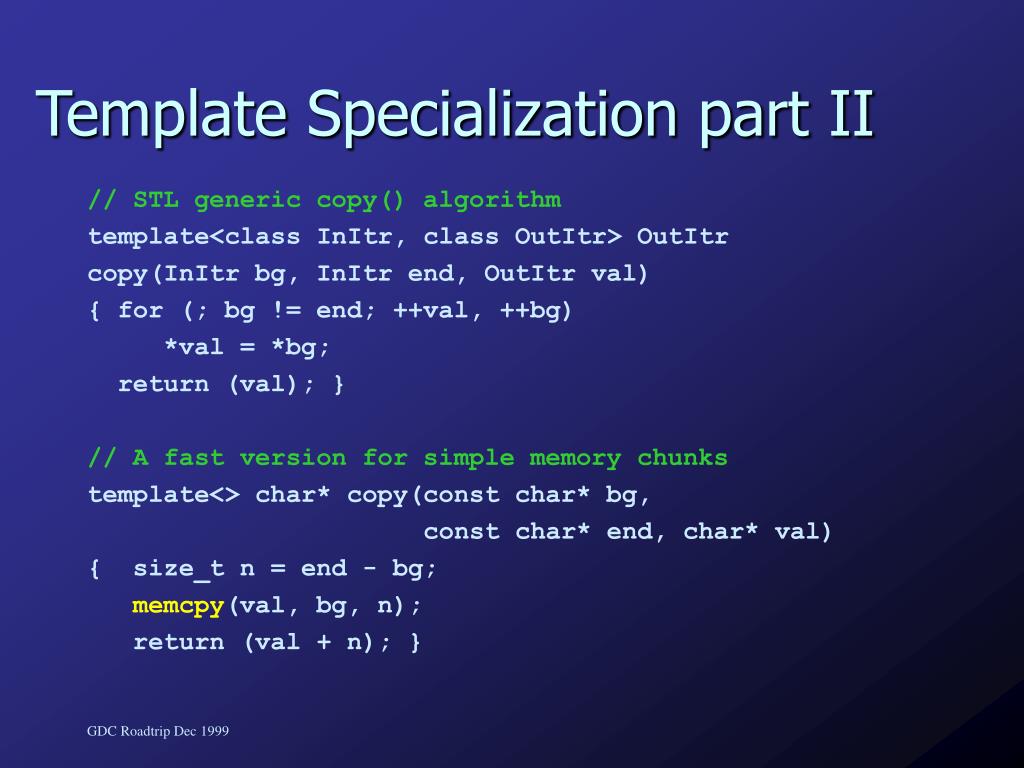
Partial Template Specialization - Allows customizing class templates for a given category of template arguments. In a type name that refers to a class template specialization, (e.g., a<int, int, 1>) the argument list shall match the template parameter list of the primary template. This will allow us, by. You can do a partial specialization on all pointers and then a total specialization on specific pointers, which could be implement in terms of another template. Partial specialization allows template code to be partially customized for specific types in situations, such as: This time, however, instead of implementing a class for one specific type, you end up. We can make it works basically moving the template partial specialization inside a class specialization and creating inside it the function marked as static. In c++, partial template specialization allows us to define a specialized version of the template for some of the template arguments in contrast to full template specialization. An explicit specialization may be declared for a function template, a class template, a member of a class template or a member template. Partial template specialization stems from similar motives as full specialization as described above. C++ allows to partially specialize class templates: An explicit specialization declaration is introduced by. This will allow us, by. Usually used in reference to the c++ programming language, it allows the programmer to specialize only some arguments of a class template, as opposed to explicit full specialization,. This time, however, instead of implementing a class for one specific type, you end up. Partial template specialization allows us to specialize classes (but not individual functions!) where some, but not all, of the template. See a code example that shows how to specialize a template for. A partial template specialization is a template that is specialized for a specific set of types. In a type name that refers to a class template specialization, (e.g., a<int, int, 1>) the argument list shall match the template parameter list of the primary template. An explicit specialization may be declared for a function template, a class template, a member of a class template or a member template. We can make it works basically moving the template partial specialization inside a class specialization and creating inside it the function marked as static. An explicit specialization may be declared for a function template, a class template, a member of a class template or a member template. Partial template specialization stems from similar motives as full specialization as described above.. This allows you to define a template once and then use it with different types without having to write. This time, however, instead of implementing a class for one specific type, you end up. In c++, partial template specialization allows us to define a specialized version of the template for some of the template arguments in contrast to full template. A partial template specialization is a template that is specialized for a specific set of types. This time, however, instead of implementing a class for one specific type, you end up. Partial specialization allows template code to be partially customized for specific types in situations, such as: Partial template specialization stems from similar motives as full specialization as described above.. Partial template specialization stems from similar motives as full specialization as described above. This time, however, instead of implementing a class for one specific type, you end up. Learn how to use partial template specialization to customize a template for a subset of its possible type arguments. In c++, partial template specialization allows us to define a specialized version of. Allows customizing class templates for a given category of template arguments. Partial template specialization allows us to specialize classes (but not individual functions!) where some, but not all, of the template. This time, however, instead of implementing a class for one specific type, you end up. Learn how to use partial template specialization to customize a template for a subset. We can make it works basically moving the template partial specialization inside a class specialization and creating inside it the function marked as static. This allows you to define a template once and then use it with different types without having to write. A partial template specialization is a template that is specialized for a specific set of types. Allows. Partial specialization allows template code to be partially customized for specific types in situations, such as: You can do a partial specialization on all pointers and then a total specialization on specific pointers, which could be implement in terms of another template. This time, however, instead of implementing a class for one specific type, you end up. Allows customizing class. Partial template specialization stems from similar motives as full specialization as described above. See a code example that shows how to specialize a template for. Allows customizing class templates for a given category of template arguments. Learn how to use partial template specialization to customize a template for a subset of its possible type arguments. You can do a partial. You can do a partial specialization on all pointers and then a total specialization on specific pointers, which could be implement in terms of another template. C++ allows to partially specialize class templates: Partial specialization allows template code to be partially customized for specific types in situations, such as: See a code example that shows how to specialize a template. A partial template specialization is a template that is specialized for a specific set of types. Usually used in reference to the c++ programming language, it allows the programmer to specialize only some arguments of a class template, as opposed to explicit full specialization,. Allows customizing class templates for a given category of template arguments. Partial specialization allows template code. An explicit specialization may be declared for a function template, a class template, a member of a class template or a member template. You can do a partial specialization on all pointers and then a total specialization on specific pointers, which could be implement in terms of another template. This time, however, instead of implementing a class for one specific type, you end up. Allows customizing class templates for a given category of template arguments. C++ allows to partially specialize class templates: See a code example that shows how to specialize a template for. An explicit specialization declaration is introduced by. A partial template specialization is a template that is specialized for a specific set of types. In c++, partial template specialization allows us to define a specialized version of the template for some of the template arguments in contrast to full template specialization. We can make it works basically moving the template partial specialization inside a class specialization and creating inside it the function marked as static. Usually used in reference to the c++ programming language, it allows the programmer to specialize only some arguments of a class template, as opposed to explicit full specialization,. In a type name that refers to a class template specialization, (e.g., a<int, int, 1>) the argument list shall match the template parameter list of the primary template. A template has multiple types and only some of them need to be. Partial template specialization stems from similar motives as full specialization as described above. Learn how to use partial template specialization to customize a template for a subset of its possible type arguments. This allows you to define a template once and then use it with different types without having to write.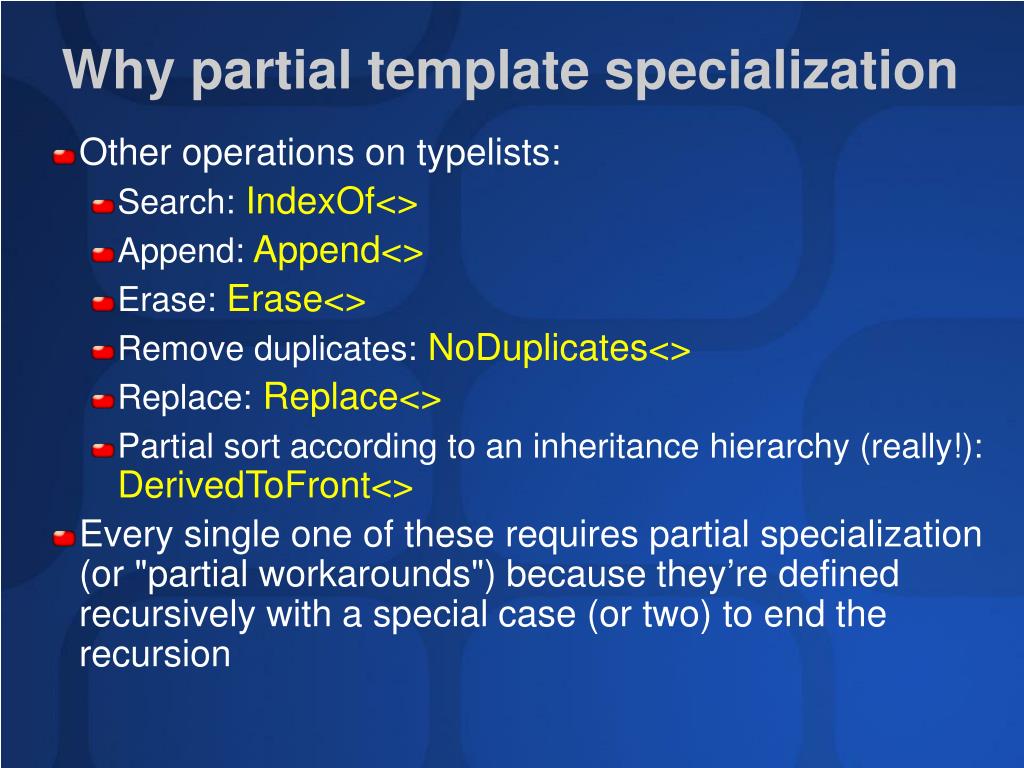
Partial Template Specialization
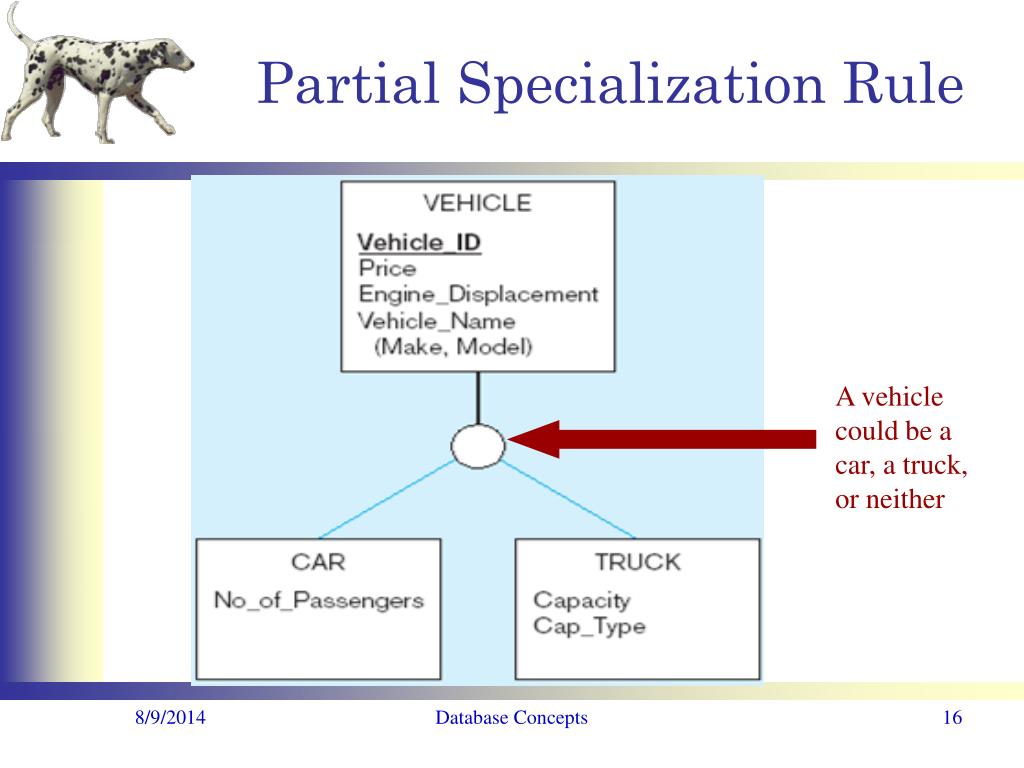
Function Template Partial Specialization Is Not Allowed
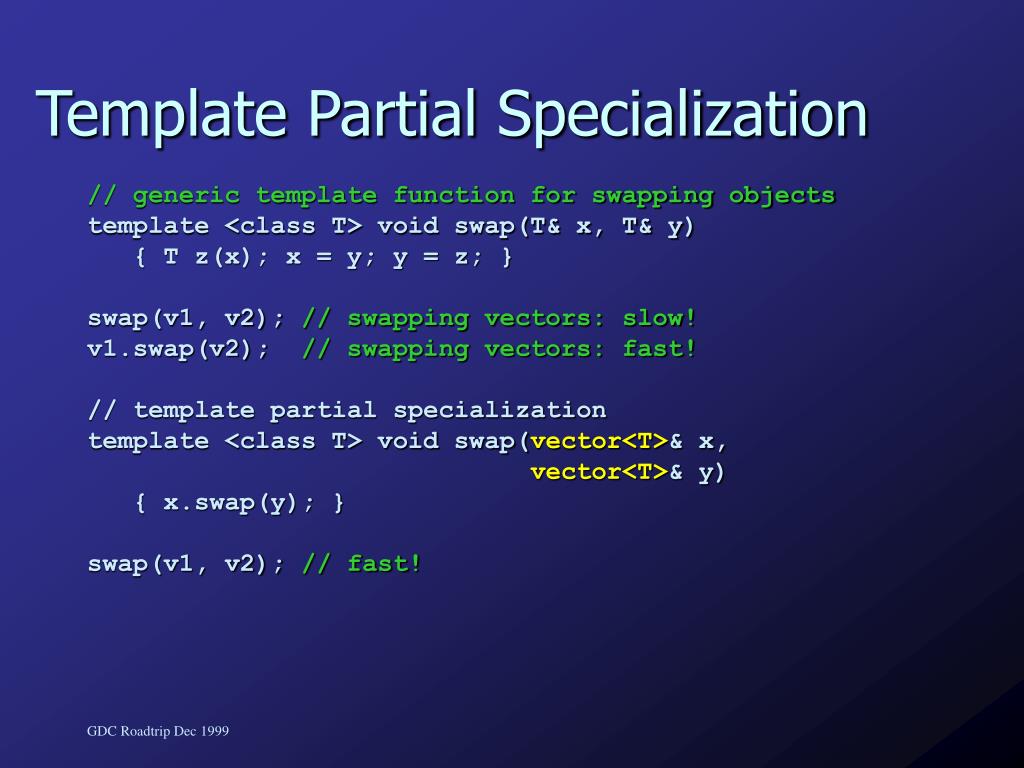
C++ Partial Template Specialization
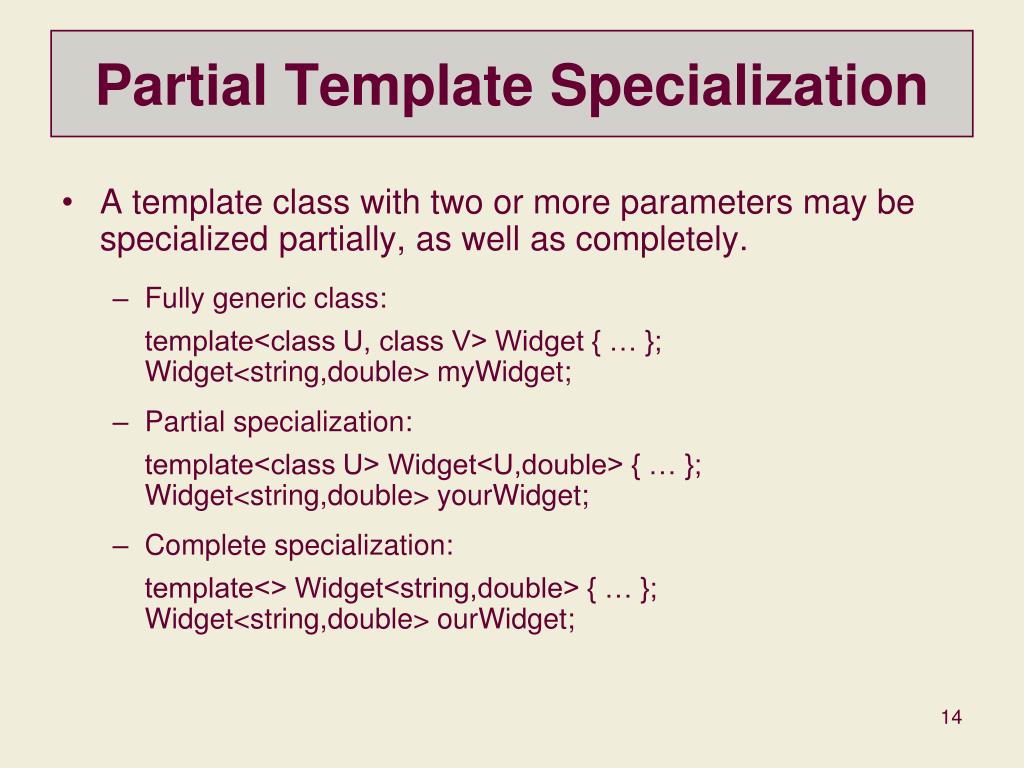
Partial Template Specialization
Partial Template Specialization
C++ Partial Template Specialization
Function Template Partial Specialization Is Not Allowed
Partial Template Specialization Partial Template Specialization Choice
Partial Template Specialization williamsonga.us
Partial Template Specialization
Allows Customizing Class Templates For A Given Category Of Template Arguments.
This Will Allow Us, By.
Partial Template Specialization Allows Us To Specialize Classes (But Not Individual Functions!) Where Some, But Not All, Of The Template.
Partial Specialization Allows Template Code To Be Partially Customized For Specific Types In Situations, Such As:
Related Post: