
Laravel How To Use Conditional Partial Templates
Laravel How To Use Conditional Partial Templates - The laravel blade templating engine provides us with a number of conditional directives, namely @if, @unless, @isset, @empty, and even directives for checking common. I know i can use @if @else statement in blade. I am doing the same thing, but blade extending both the template. Blade provides directives like @if, @else, @elseif,. These options allow you to control. Laravel subviews conditional partial templates in my resources/views folder i have a file called home.blade.php. Using partial templates in laravel offers several benefits: This guide covers how to use partial templates in laravel, manage conditional partial templates, and integrate these techniques into larger applications. With blade, you can also include partial views (called 'partials') directly into a page like so: I want to make a reusable table template that i can extend (for example different header and body for different pages). This guide covers how to use partial templates in laravel, manage conditional partial templates, and integrate these techniques into larger applications. This article provides practical advice, common mistakes to avoid, and troubleshooting. I want to extend template based on condition. In addition to template inheritance and displaying data, blade also provides convenient shortcuts for common php control structures, such as conditional statements and loops. The laravel blade templating engine provides us with a number of conditional directives, namely @if, @unless, @isset, @empty, and even directives for checking common. Throughout this tutorial, we have explored different ways to conditionally. These options allow you to control. In this article, we'll explore five tips for working with subviews in laravel, including how to create and render subviews, how to pass data to subviews, and how to use subviews. I want to make a reusable table template that i can extend (for example different header and body for different pages). Learn how to use conditional statements in laravel blade templates to conditionally render content based on specific conditions. In addition to template inheritance and displaying data, blade also provides convenient shortcuts for common php control structures, such as conditional statements and loops. I want to extend template based on condition. This article provides practical advice, common mistakes to avoid, and troubleshooting. Dynamically apply css classes based on conditions. I know i can use @if @else statement in blade. Partial templates, also known as fragments, offer a powerful way to organize and reuse code across your laravel views, enhancing both readability and maintainability. I know i can use @if @else statement in blade. Blade provides directives like @if, @else, @elseif,. Laravel subviews conditional partial templates in my resources/views folder i have a file called home.blade.php. These options allow you. Partial templates, also known as fragments, offer a powerful way to organize and reuse code across your laravel views, enhancing both readability and maintainability. With blade, you can also include partial views (called 'partials') directly into a page like so: Discover five essential tips for effectively utilizing conditional partial templates in laravel. The laravel blade templating engine provides us with. The laravel blade templating engine provides us with a number of conditional directives, namely @if, @unless, @isset, @empty, and even directives for checking common. Using partial templates in laravel offers several benefits: With blade, you can also include partial views (called 'partials') directly into a page like so: I know i can use @if @else statement in blade. You can. You can create conditional partial. Discover five essential tips for effectively utilizing conditional partial templates in laravel. Django templates are a crucial part of the framework. In addition to template inheritance and displaying data, blade also provides convenient shortcuts for common php control structures, such as conditional statements and loops. Simplify your templates by creating reusable blade directives. I want to extend template based on condition. Discover five essential tips for effectively utilizing conditional partial templates in laravel. Laravel subviews conditional partial templates in my resources/views folder i have a file called home.blade.php. Learn how to use conditional statements in laravel blade templates to conditionally render content based on specific conditions. Django templates are a crucial part of. Learn how to use conditional statements in laravel blade templates to conditionally render content based on specific conditions. You can create conditional partial. Django templates are a crucial part of the framework. Using partial templates in laravel offers several benefits: Throughout this tutorial, we have explored different ways to conditionally. Understanding what they are and why they’re useful can help you build seamless, adaptable, and functional templates for. Blade provides directives like @if, @else, @elseif,. This article provides practical advice, common mistakes to avoid, and troubleshooting. Using partial templates in laravel offers several benefits: In this article, we'll explore five tips for working with subviews in laravel, including how to. Using partial templates in laravel offers several benefits: Blade provides directives like @if, @else, @elseif,. Laravel how can i include partial view. With blade, you can also include partial views (called 'partials') directly into a page like so: Discover five essential tips for effectively utilizing conditional partial templates in laravel. The laravel blade templating engine provides us with a number of conditional directives, namely @if, @unless, @isset, @empty, and even directives for checking common. This guide covers how to use partial templates in laravel, manage conditional partial templates, and integrate these techniques into larger applications. Learn how to use conditional statements in laravel blade templates to conditionally render content based. I am doing the same thing, but blade extending both the template. I want to make a reusable table template that i can extend (for example different header and body for different pages). Blade provides directives like @if, @else, @elseif,. Simplify your templates by creating reusable blade directives. Using partial templates in laravel offers several benefits: This article provides practical advice, common mistakes to avoid, and troubleshooting. Dynamically apply css classes based on conditions. With blade, you can also include partial views (called 'partials') directly into a page like so: Laravel subviews conditional partial templates in my resources/views folder i have a file called home.blade.php. Throughout this tutorial, we have explored different ways to conditionally. I want to extend template based on condition. In this article, we'll explore five tips for working with subviews in laravel, including how to create and render subviews, how to pass data to subviews, and how to use subviews. The laravel blade templating engine provides us with a number of conditional directives, namely @if, @unless, @isset, @empty, and even directives for checking common. I know i can use @if @else statement in blade. Django templates are a crucial part of the framework. Discover five essential tips for effectively utilizing conditional partial templates in laravel.
How to Use Conditional Statements in Laravel 9 Query Builder? Laramatic
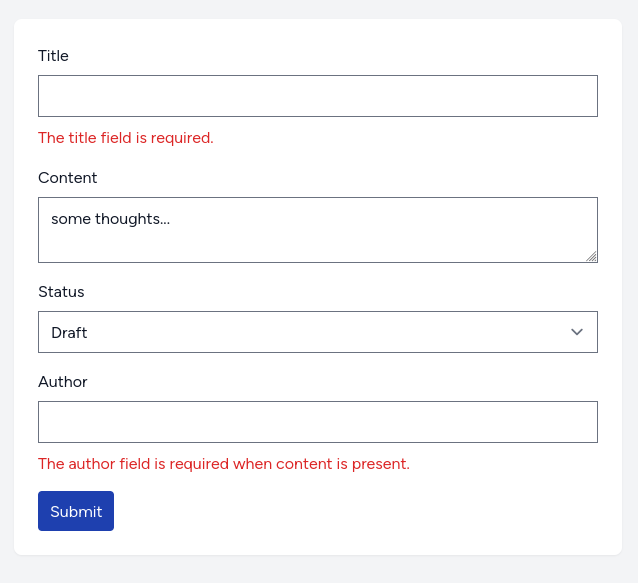
Laravel Conditional Validation Based on Other Fields 4 Examples

Conditional Clause Laravel Conditional Clause Laravel 9 tutorial

6 Conditional Statements in Laravel YouTube

Laravel 9 React Tutorial Conditional Rendering YouTube

Laravel 10 Tutorial 18 Best Way to Conditional Rendering YouTube

Laravel API Resource with Conditional Fields Laravel 9 Tutorial YouTube

Laravel Partial Resource in Laravel How to Create efficient partial
How To Use Conditional Clauses With Example Using Laravel

Dynamic templates with Viewfirst in Laravel 5.5 YouTube
In Addition To Template Inheritance And Displaying Data, Blade Also Provides Convenient Shortcuts For Common Php Control Structures, Such As Conditional Statements And Loops.
This Guide Covers How To Use Partial Templates In Laravel, Manage Conditional Partial Templates, And Integrate These Techniques Into Larger Applications.
From The Research I Did, I Figured That Templates Are Only.
Learn How To Use Conditional Statements In Laravel Blade Templates To Conditionally Render Content Based On Specific Conditions.
Related Post: